Classification : -
Kingdom : Plantae
Division : Angiosperms
Class : Monocotyledonae
Order : Asparagales
Family : Amaryllidaceae
Genus : Allium
Species : Allium cepa
Introduction :
Allium cepa, also known as onion, is one of the most widely cultivated and consumed vegetable crops in the world. It belongs to the family Amaryllidaceae. These onions are valued both as food ingredients and for their medicinal properties. They have been used since ancient times for various ailments. Onions originated from Central Asia and have been used by humans for thousands of years. It has the main characteristic of pungent aroma and flavor due to sulfur containing compounds which are released when tissues are damaged.
Habit and Habitat :
Allium cepa is an herbaceous biennial plant which is usually grown for its edible bulb. This plant is mainly found in Central Asia, especially in Iran and Pakistan or some other parts of the world. It has a short, compressed stem called basal plate which develops fleshy, concentric leaf bases to form the bulb. The plant grows 30-60 cm tall and has long, hollow, cylindrical leaves having bluish-green appearance. Onion grows best in temperate to subtropical regions. They prefer well drained, loamy to sandy soils which are rich in organic matter. The onion requires full sunlight for proper development of the bulb. The crop germinates well in mild temperatures but requires warmer conditions for bulb formation.
Morphology and Anatomy :
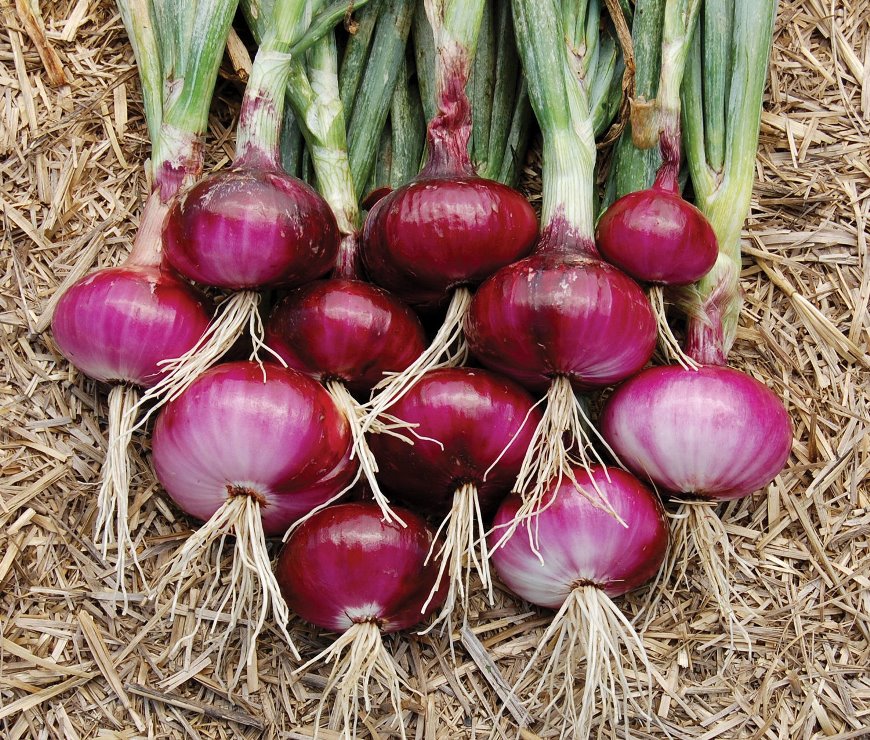
Today, Allium cepa is widely grown in agricultural fields, home gardens and commercial farms. It forms an integral part of global vegetable production due to its medicinal and nutritional value. The scales on the bulb serve as storage organs that are rich in carbohydrates which enables the plant to survive in unfavorable condition. The scales on the bulb are arranged around a short, disc-like stem which is known as a basal plate from where numerous fibrous, adventitious roots arise for penetration into the soil. The leaves of the onion are long, hollow, cylindrical and green. Each leaf is divided into two parts:
(1) A tubular green upper portion which is responsible for photosynthesis of plant
(2) A swollen basal portion that helps in the formation of a bulb.
The plant produces a tall, solid scape (flowering stalk) that terminates in small, white or pinkish flowers.
The onion bulb anatomically shows distinct layers of modified leaves which are mainly composed of parenchymatous cells. These cells are thin- walled, loosely packed and rich in water which stores carbohydrates. Vascular bundles are poorly developed within the bulb scales. Each bundle contains xylem and phloem which are surrounded by bundle sheaths.
Medicinal use :
Allium cepa, plays an important role in medicinal properties. It has been used as a natural remedy for treating various ailments such as infections, inflammation, respiratory or digestive problems. Syrups and infusions are prepared from warm onions which are often used to ease congestion and soothe respiratory passages. The extracts of onion are used to treat wounds and scars.

Speech Disorder
A speech disorder, also known as a speech impairment...

ADHD
Attention-deficit / hyperactivity disorder (ADHD) is a...

Cerebral Palsy(CP)
Cerebral palsy (CP) is a group of neurological disorders...

Cancer
Cancer is a broad term for diseases where cells...